
Waterless Toilets for Off-Grid Living
Composting, bag-sealing and portable dry toilets explained — for camping, caravans, tiny homes and remote properties.
Why Go Waterless?
Whether you're camping in a national park, living in a tiny home, or setting up a remote off-grid property, managing human waste without mains sewerage is one of the most practical challenges you'll face. Waterless toilets solve this problem without the need for water connections, septic tanks or chemical treatments that can harm the environment.
Modern waterless toilets have come a long way. Today's options are odour-controlled, hygienic and surprisingly easy to live with. The right choice depends on how long you'll be using it, how many people are involved, and whether you're looking for a permanent installation or a portable solution for weekends away.
Waterless Toilet Guides & Reviews
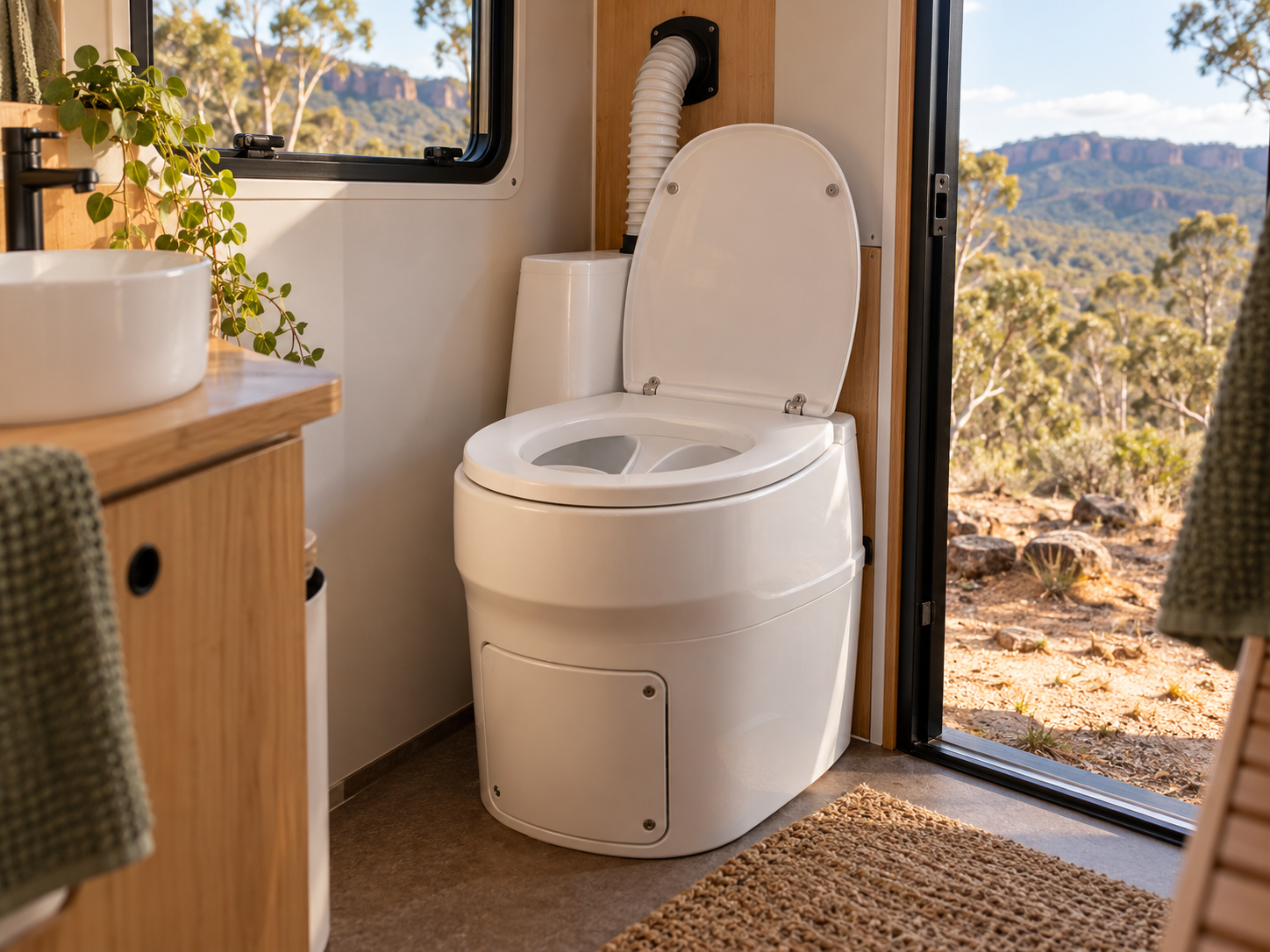
Best Composting Toilets for Off-Grid 2026
Top-rated composting toilets for off-grid cabins, caravans and remote properties in Australia.
READ GUIDE →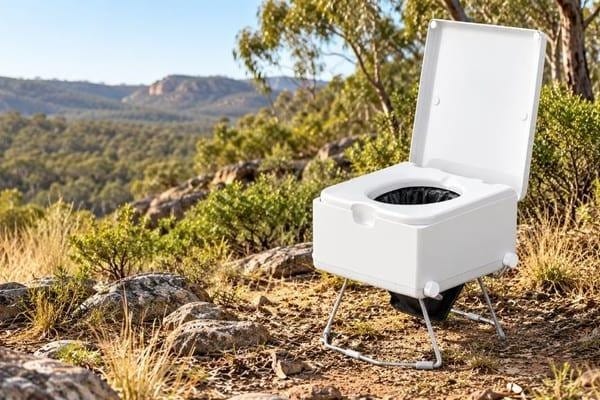
Waterless Toilet Options: Composting vs Incinerating vs Cassette
Compare the main types of waterless toilets to find the best fit for your off-grid setup.
READ GUIDE →Affiliate disclosure: We may earn a commission if you purchase through our links, at no extra cost to you.
Waterless Toilet Options Explained
Composting Toilets
Composting toilets are the gold standard for permanent off-grid installations. They separate liquid and solid waste, then use natural aerobic decomposition to break down solids into a dry, compost-like material over time. Most models include a ventilation fan to eliminate odours and a heating element to speed up the composting process. The end result is a dry, inert material that can often be used as garden compost, depending on local regulations.
Tiny homes, permanent off-grid cabins, remote properties
Require regular maintenance, emptying every few months, and a power source for the fan and heater. Initial purchase cost is higher than other options.
Bag-Sealing Toilets
Bag-sealing toilets use a mechanism to wrap and seal each deposit in a biodegradable bag immediately after use. This makes them extremely hygienic and virtually odour-free — ideal for situations where you need a clean, no-fuss solution. The sealed bags are disposed of in general waste. Popular brands use a rotating drum or twist mechanism to seal the bag before the next use.
Caravans, motorhomes, short-term camping, situations where composting isn't practical
Ongoing cost of replacement bags. Not suitable for long-term use without regular waste disposal access.
Portable Dry Toilets
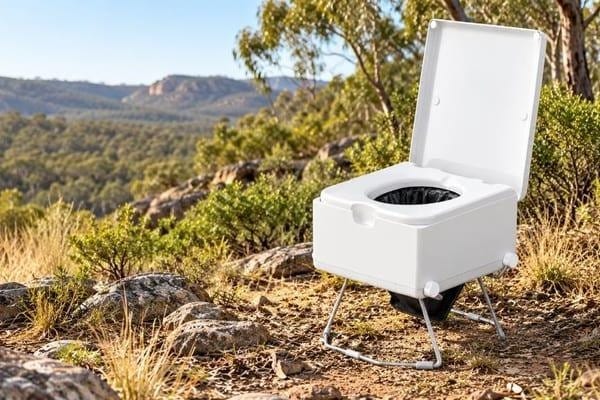
Portable dry toilets are the simplest and most affordable option. They typically consist of a seat and lid over a bucket or bag, with a dry cover material (such as sawdust, peat moss or commercial dry toilet powder) added after each use to control odour and begin the decomposition process. Some models are self-contained with a small waste tank; others use compostable bags for easy disposal.
Weekend camping, festivals, emergency backup, budget-conscious buyers
Require a cover material to manage odour effectively. Waste must be disposed of responsibly — check local regulations for composting or disposal requirements.
Waterless Toilet Types at a Glance
This table is a general guide only. Actual performance, capacity and maintenance requirements vary by brand and model.
| Type | Best Use | Odour Control | Maintenance | Approx. Cost |
|---|---|---|---|---|
| Composting toilet | Permanent off-grid | Excellent | Empty every 1–3 months | $800–$3,000+ |
| Bag-sealing toilet | Caravans & motorhomes | Very good | Replace bags regularly | $300–$800 |
| Portable dry toilet | Camping & backup | Good (with cover material) | After each trip | $50–$250 |
What to Consider Before You Buy
How many people will use it, and how often? Composting toilets have a capacity limit — a unit sized for one person full-time may not suit a family of four.
Is it a permanent installation or do you need something portable? Composting toilets are generally fixed; bag-sealing and dry toilets can move with you.
Do you have power available? Most composting toilets need 12V or 240V for the fan and heater. Portable dry toilets need no power at all.
What are the local regulations? Some states and councils have specific rules about composting toilet installation and waste disposal. Check before you buy.
How will you handle the liquid waste? Many composting toilets divert urine separately. You'll need a plan for disposing of or using this liquid.
What's your budget for ongoing consumables? Bag-sealing toilets have a recurring bag cost; dry toilets need cover material. Factor this into your total cost of ownership.
Browse Waterless Toilets
Ready to find the right waterless toilet for your setup? Browse a wide range of composting toilets, bag-sealing toilets and portable dry toilets on eBay Australia.
Affiliate disclosure: We may earn a commission if you purchase through our links, at no extra cost to you.