
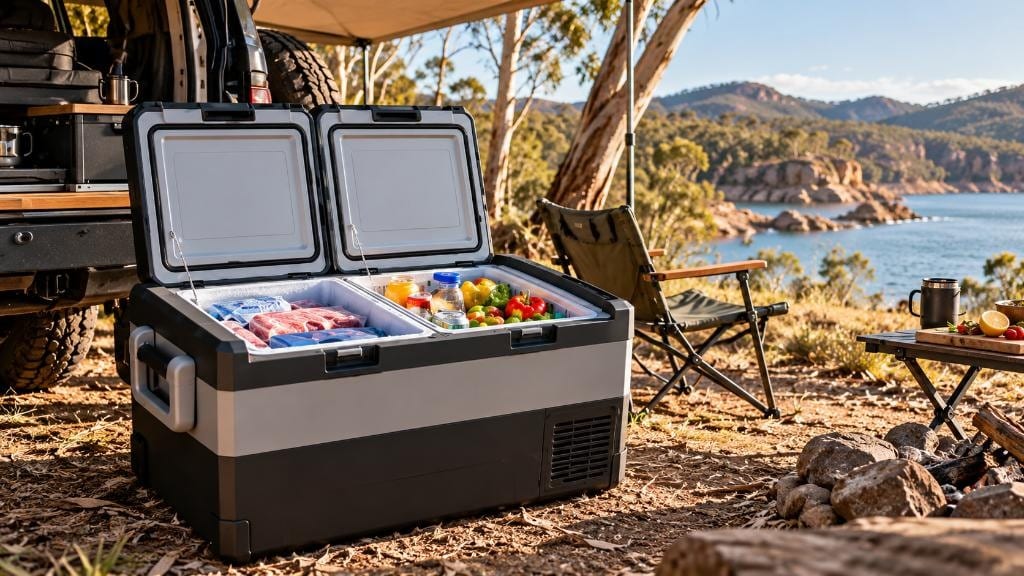
12V Fridges & Freezers
Your complete guide to choosing the right 12V fridge or freezer for camping, caravanning, 4WD adventures and off-grid living.
12V Fridges Guides & Reviews
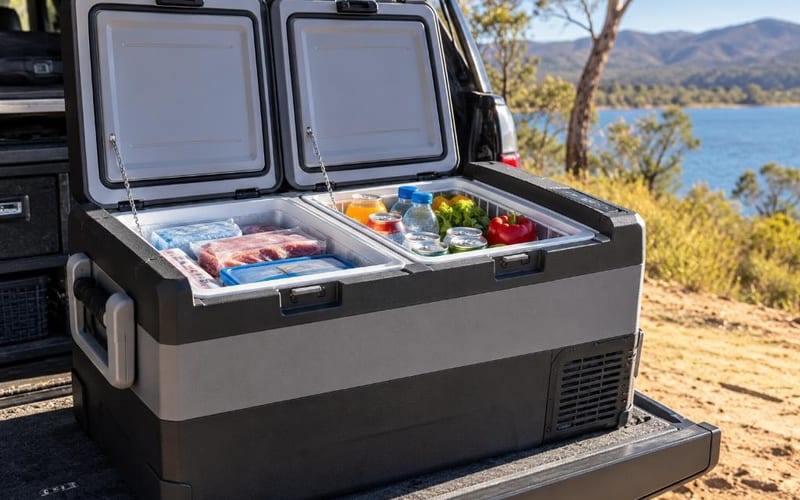
Best 12V Fridges for Australia 2026
Top-rated 12V fridges and freezers for camping, caravanning and 4WD touring in Australia.
READ GUIDE →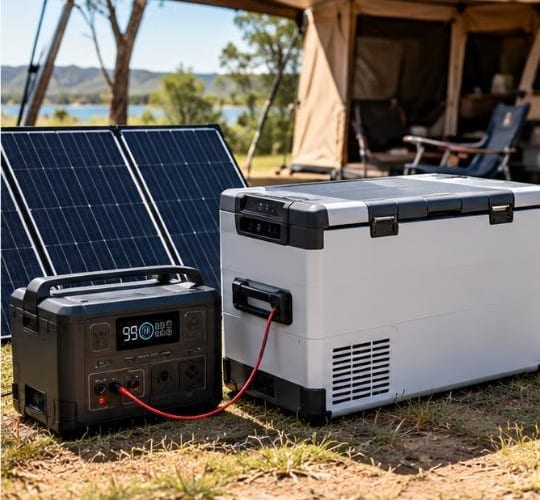
12V Fridge Power Consumption: What You Need to Know
Understand how much power your 12V fridge draws and how to size your battery and solar setup.
READ GUIDE →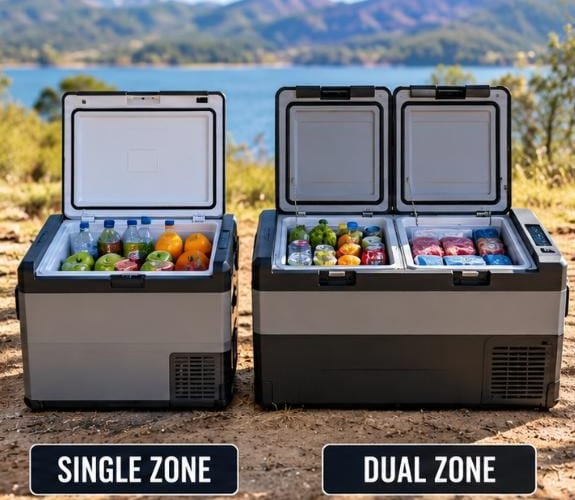
Single Zone vs Dual Zone 12V Fridges: Which Is Better?
Compare single zone and dual zone 12V fridges to find the right setup for your trips.
READ GUIDE →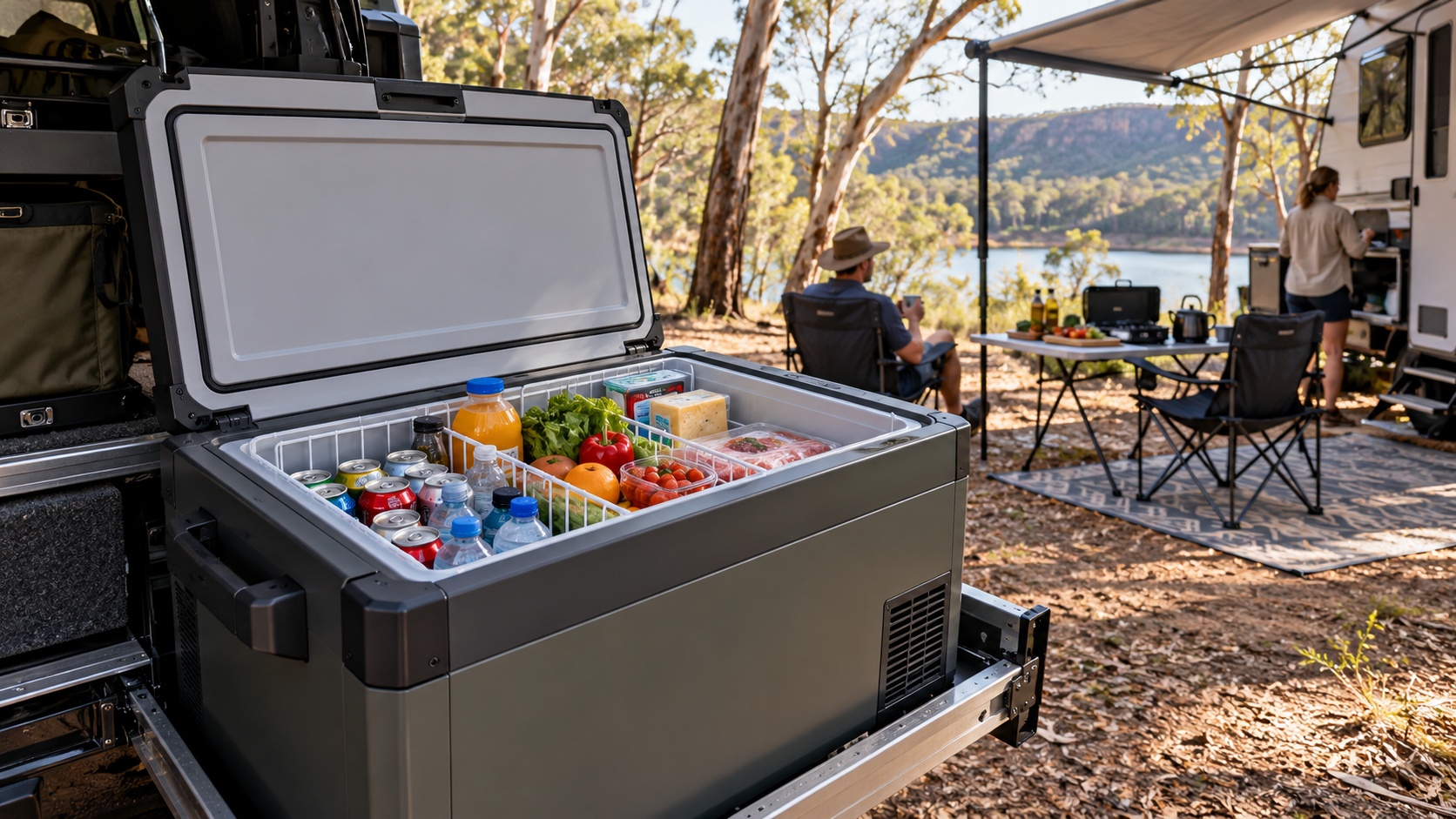
What Size 12V Fridge Do I Need?
Choose the right 12V fridge capacity for camping, caravanning and 4WD touring based on your needs.
READ GUIDE →Affiliate disclosure: We may earn a commission if you purchase through our links, at no extra cost to you.
Why a 12V Fridge is a Game-Changer
A quality 12V fridge is one of the best investments you can make for off-grid living or extended travel. Unlike an ice-filled esky that needs constant restocking, a 12V compressor fridge keeps your food and drinks at a consistent temperature for days — or weeks — running directly from your vehicle battery, solar setup or portable power station.
Whether you're crossing the Simpson Desert, parked up at a coastal campsite, or living full-time in a caravan, the right 12V fridge makes a huge difference to your comfort and the quality of your food on the road.
Capacity: How Big Do You Need?
Capacity is measured in litres and is the first thing to consider. As a rough guide, allow around 10–15L per person per week for a mix of fresh food and drinks. A solo traveller can get by with a 25–35L fridge, while a couple will typically want 40–60L, and a family will need 60L or more.
Keep in mind that a larger fridge draws more power, so balance your capacity needs against your battery and solar setup. It's also worth measuring your available space carefully — 12V fridges come in a wide range of footprints and heights.
Compressor Type: What's Inside Matters
The compressor is the heart of a 12V fridge. Most quality units use a Secop (formerly Danfoss) or Sawafuji compressor — both are proven, efficient and reliable in extreme temperatures. Cheaper units may use a Huayi or generic compressor that struggles in the Australian heat.
Avoid thermoelectric (Peltier) coolers for serious off-grid use — they can only cool to around 20°C below ambient temperature, which means they struggle on a hot Australian day and consume significantly more power than a compressor fridge.
Power Consumption & Battery Draw
Power consumption is critical for off-grid use. A good 12V compressor fridge will draw between 0.5A and 1.5A average at 12V — roughly 12–36Ah per day depending on ambient temperature and how often the lid is opened. In hot conditions, draw increases as the compressor works harder.
To calculate your daily power budget, multiply the average amp draw by 24 hours. A fridge drawing 1A average uses 24Ah per day. If you have a 100Ah battery, you'd want to keep the fridge draw to no more than 50% of capacity (50Ah) to protect battery life — so a 100Ah battery gives you roughly two days of fridge power without recharging.
Always check the manufacturer's rated power consumption at both 25°C and 40°C ambient — the difference can be significant and will affect your solar and battery sizing.
Insulation: The Unsung Hero
Better insulation means the compressor runs less often, which saves power and extends the life of the unit. Look for fridges with thick polyurethane foam insulation and a tight-sealing lid gasket. Rotomoulded outer shells (like those on ARB and Engel units) offer excellent insulation and durability.
Lid orientation matters too — top-opening fridges retain cold air better than front-opening models because cold air sinks. However, front-opening slide fridges are more convenient in a vehicle where you can't easily access the top.
Dual-Zone Models: Fridge & Freezer in One
Dual-zone 12V fridges split the interior into two independently controlled compartments — typically a fridge zone and a freezer zone. This is ideal for longer trips where you want to keep ice cream frozen while also chilling drinks and fresh food.
Popular dual-zone models include the ARB Elements, Dometic CFX3, and National Luna. They're generally larger and more expensive than single-zone units, but the flexibility is worth it for extended travel. Some models also allow you to run both zones as fridge-only for maximum fresh food capacity.
Solar & Battery Compatibility
Most 12V fridges run on 12V or 24V DC and many also accept 240V AC, making them compatible with solar setups, portable power stations, vehicle batteries and mains power. Look for a wide voltage input range (typically 10–32V) to handle voltage fluctuations from solar charging.
For solar-powered setups, pair your fridge with a quality MPPT solar charge controller and a lithium (LiFePO4) battery for the best efficiency. Lithium batteries can be discharged to 80–90% without damage, giving you significantly more usable capacity than AGM or lead-acid batteries.
A good rule of thumb: size your solar panels to produce at least 2–3x your daily fridge power consumption to account for cloudy days and other loads. For a fridge drawing 30Ah/day, aim for at least 100–150W of solar panels.
Key Features to Look For
Beyond the basics, look for a low-voltage cut-off to protect your vehicle battery from being drained flat, a digital temperature display for easy monitoring, and a sturdy lid hinge that can handle rough corrugated roads. USB charging ports, Bluetooth app control, and removable baskets are handy extras.
For 4WD use, check the fridge's operating-angle specification — the rated tilt angle varies by model and matters on steep tracks. A robust carry handle and tie-down points are also worth looking for if the fridge will be moving around.
Ready to Find Your 12V Fridge?
Browse a wide range of 12V fridges and freezers from trusted brands on eBay Australia.
Affiliate disclosure: We may earn a commission if you purchase through our links, at no extra cost to you.