Single Zone vs Dual Zone 12V Fridges: Which Is Better?
One of the most common questions when shopping for a 12V fridge is whether to go single zone or dual zone. Both configurations use the same compressor technology, but they handle your food and drinks very differently. This guide compares both types across common Australian camping, touring and caravanning situations to help you decide which configuration suits you.
Affiliate disclosure: We may earn a commission if you purchase through our links, at no extra cost to you. Learn more.
What Is a Single Zone 12V Fridge?
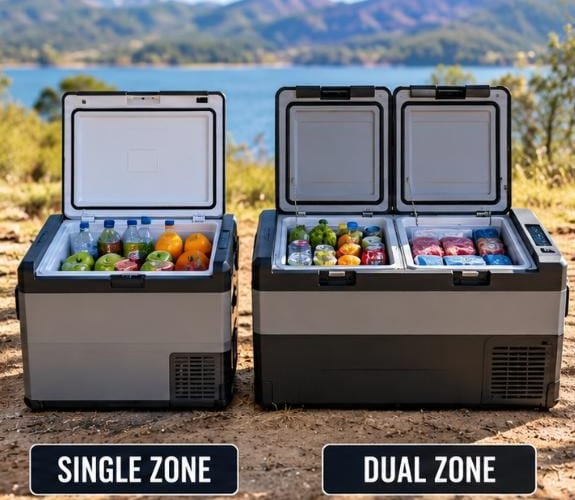
A single zone 12V fridge has one insulated cabinet controlled by a single thermostat. The entire interior is set to one temperature — typically anywhere from around -18°C (freezer mode) up to +10°C (fridge mode), depending on the model. Most single zone fridges are used as a fridge only, set to around 3–5°C for food and drink storage. Some models can be switched to freezer mode for the whole cabinet, which is useful if you want to carry frozen meat or ice cream. The simplicity of a single zone design means fewer components and a straightforward user experience. Power consumption for a given capacity may be lower than a dual zone unit, but this is not guaranteed — actual draw depends on fridge size, compressor efficiency, insulation quality, ambient temperature, ventilation and thermostat settings.
What Is a Dual Zone 12V Fridge?
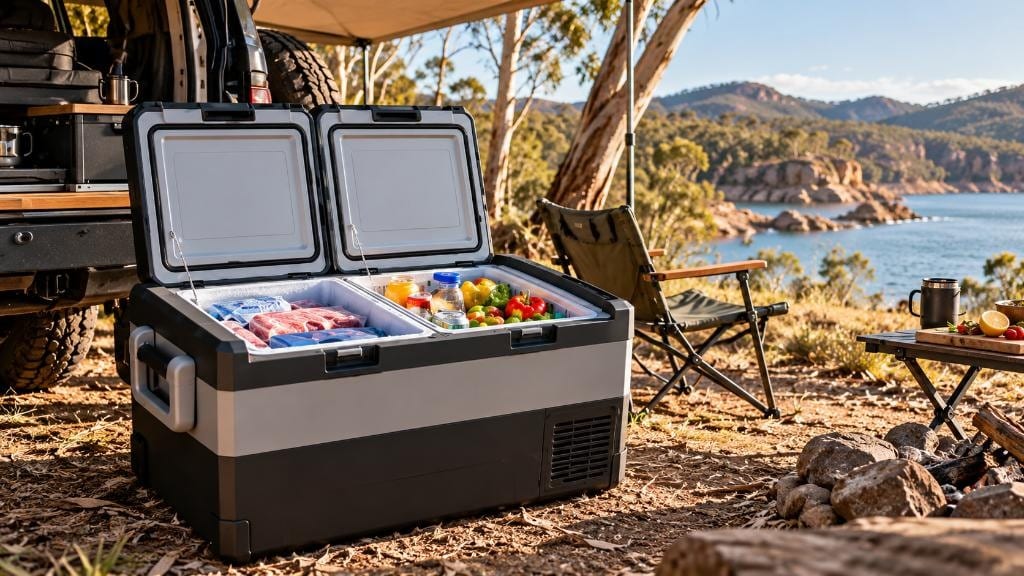
A dual zone 12V fridge divides the cabinet into two independently controlled compartments — typically a larger fridge section and a smaller freezer section, each with its own temperature setting. This means you can keep drinks and fresh food at 4°C in one section while keeping frozen goods at -15°C in the other, all from the same unit. Some dual zone models use a single compressor with a divider and separate airflow; others use two separate compressors. The dual zone design adds flexibility but also adds complexity, weight and — in most cases — power consumption compared to a single zone unit of similar total capacity.
Advantages and Disadvantages of Single Zone
Single zone fridges have several clear advantages. They are generally lighter and more compact for a given litre capacity, making them easier to fit in tight spaces and lighter to carry. Power consumption may be lower because there is only one temperature zone to maintain, though this depends on fridge size, compressor efficiency, insulation, ambient temperature, ventilation and thermostat settings — it is not a universal guarantee. They are simpler mechanically, which can mean better long-term reliability. The main disadvantage is that you cannot simultaneously chill drinks and freeze food — if you want frozen goods, the whole cabinet goes to freezer temperature and you lose your fridge space. For most weekend campers who are happy to carry a separate small esky for frozen items, this is rarely a problem. For longer trips where you want both fresh and frozen food in one unit, it becomes a real limitation.
Advantages and Disadvantages of Dual Zone
The main advantage of a dual zone fridge is obvious: you get both a fridge and a freezer in one unit, without needing to carry two separate appliances. This is particularly valuable in a caravan or camper trailer where space is at a premium and you want to carry frozen meat, frozen meals and other frozen goods alongside fresh food and cold drinks. The disadvantages are real, though. Dual zone fridges are heavier and typically more expensive than single zone units of similar total capacity. Power consumption is generally higher, especially when the freezer section is running hard in hot conditions. The divider between zones also reduces the usable volume of each section, so a 60L dual zone fridge does not give you 60L of usable space — you might get 40L of fridge and 20L of freezer, for example.
Fridge-Only vs Fridge/Freezer Use
If you only ever need to chill food and drinks — no frozen goods — a single zone fridge is almost always the better choice. It will generally be lighter and cheaper, and may draw less power — though actual consumption depends on the specific models being compared. If you regularly carry frozen meat, frozen meals or anything that needs to stay below 0°C, a dual zone unit removes the need for a separate freezer or esky. The question to ask yourself is: how often do I actually need frozen storage on a trip? For weekend camping, most people find a single zone fridge at 4°C is all they need — frozen items can be pre-frozen and carried in an esky for a short trip. For a two-week caravan trip or a long-haul 4WD adventure, having a proper freezer section in your fridge is a genuine quality-of-life upgrade.
Power Consumption: Single Zone vs Dual Zone
Power consumption is one of the most important factors for off-grid camping. A quality 40–50L single zone fridge typically draws 0.8–1.5A average in moderate conditions (around 25°C ambient), though actual draw varies significantly by model, insulation, ambient temperature and thermostat settings. A dual-zone fridge may consume more energy when one compartment is being maintained as a freezer, because the compressor must maintain a much greater temperature difference. However, there is no fixed percentage or current increase that applies to every model. Always compare the manufacturer's published Wh/day or Ah/day consumption figures where available. If your battery and solar system is modest, comparing published consumption figures carefully before buying is especially important.
Which Is Better for Weekend Camping?
For weekend camping — Friday night to Sunday afternoon — a single-zone fridge is the simpler and more economical choice for many campers. You are unlikely to need frozen storage for two nights, your battery system is probably modest, and the lighter weight and lower power draw of a single zone unit are genuine advantages when you are loading and unloading the car. A 35–45L single zone fridge is the sweet spot for most weekend campers: big enough for food and drinks for two to four people, compact enough to fit in most 4WD cargo areas, and easy on the battery. If you are car camping with a large group and need serious food storage, a larger single zone fridge or a dedicated fridge/freezer combination (two separate units) is often a better solution than a dual zone unit.
Which Is Better for Touring and Caravanning?
For touring and caravanning — especially trips of a week or more — a dual zone fridge starts to make a lot more sense. When you are away from supermarkets for extended periods, having a proper freezer section means you can carry frozen meat, batch-cooked meals and other frozen goods without relying on an esky. Most caravans and camper trailers have a dedicated 12V fridge space, and the extra weight of a dual zone unit is less of a concern when it is permanently mounted. The higher power draw is also more manageable in a caravan setup, where you typically have a larger battery bank and more solar capacity than a standalone 4WD camping setup. A 60–80L dual zone fridge is a popular choice for couples doing extended caravan trips.
Which Is Better for Long Off-Grid Trips?
For serious off-grid trips — remote 4WD travel, extended outback touring, or living off-grid for weeks at a time — the answer depends heavily on your power system. For extended off-grid use, size the battery and solar system around the fridge's expected daily energy consumption plus your other electrical loads, with enough reserve for poor weather and reduced solar production. A dual zone fridge can be a practical and convenient choice for extended trips, giving you genuine freezer capability without a second appliance — provided your power system is sized accordingly. Some experienced off-grid travellers run two separate units — a dedicated fridge and a dedicated freezer — rather than a single dual zone unit, arguing that two smaller units give more flexibility and redundancy. This approach uses more space but allows each unit to be optimised for its task.
Does a Larger Dual Zone Fridge Necessarily Use More Power?
Not necessarily — and this is a point worth understanding. A well-insulated 60L dual zone fridge from a quality brand may draw less power than a poorly insulated 45L budget single zone unit. Insulation quality, compressor efficiency and build quality all have a significant impact on power consumption, often more than raw capacity. That said, all else being equal, a larger fridge with a freezer section will draw more power than a smaller fridge-only unit. When comparing models, always look at the manufacturer's published average draw figures rather than assuming capacity equals consumption. A well-insulated larger fridge can sometimes use similar or even less energy than a less efficient smaller model, so compare manufacturer consumption figures rather than judging by capacity alone.
Tips for Choosing the Right Litre Capacity
Choosing the right capacity is just as important as choosing between single and dual zone. As a rough guide: 25–35L suits one to two people for weekend trips; 40–55L suits two people for extended trips or two to four people for weekends; 60–80L suits couples doing long caravan trips or families for extended camping. For dual zone fridges, remember that the stated capacity is the total — a 60L dual zone unit might give you 42L of fridge and 18L of freezer. If you need a specific amount of freezer space, check the individual compartment volumes, not just the total. Also consider the physical dimensions — a 60L fridge that is tall and narrow may not fit in your vehicle's cargo area as well as a 50L unit that is lower and wider. Measure your available space before buying.
Single Zone vs Dual Zone: At a Glance
| Feature | Single Zone | Dual Zone |
|---|---|---|
| Temperature zones | One (fridge or freezer) | Two (fridge + freezer simultaneously) |
| Typical power draw | Lower | Higher (especially with freezer running) |
| Weight | Lighter for given capacity | Heavier for given capacity |
| Price | Generally lower | Generally higher |
| Best for | Weekend camping, modest power systems | Extended touring, caravanning, off-grid living |
| Frozen food storage | Only if whole cabinet set to freezer | Yes — dedicated freezer section |
| Complexity | Simpler | More complex temperature management |
| Usable space | Full cabinet for one purpose | Split between fridge and freezer sections |
Affiliate Disclosure: Country Heart Outdoors participates in affiliate programs. If you purchase through our links, we may earn a commission at no extra cost to you. This helps support our free buying guides.