Portable Urinals & Personal Hygiene for Camping — Australian Buying Guide 2026
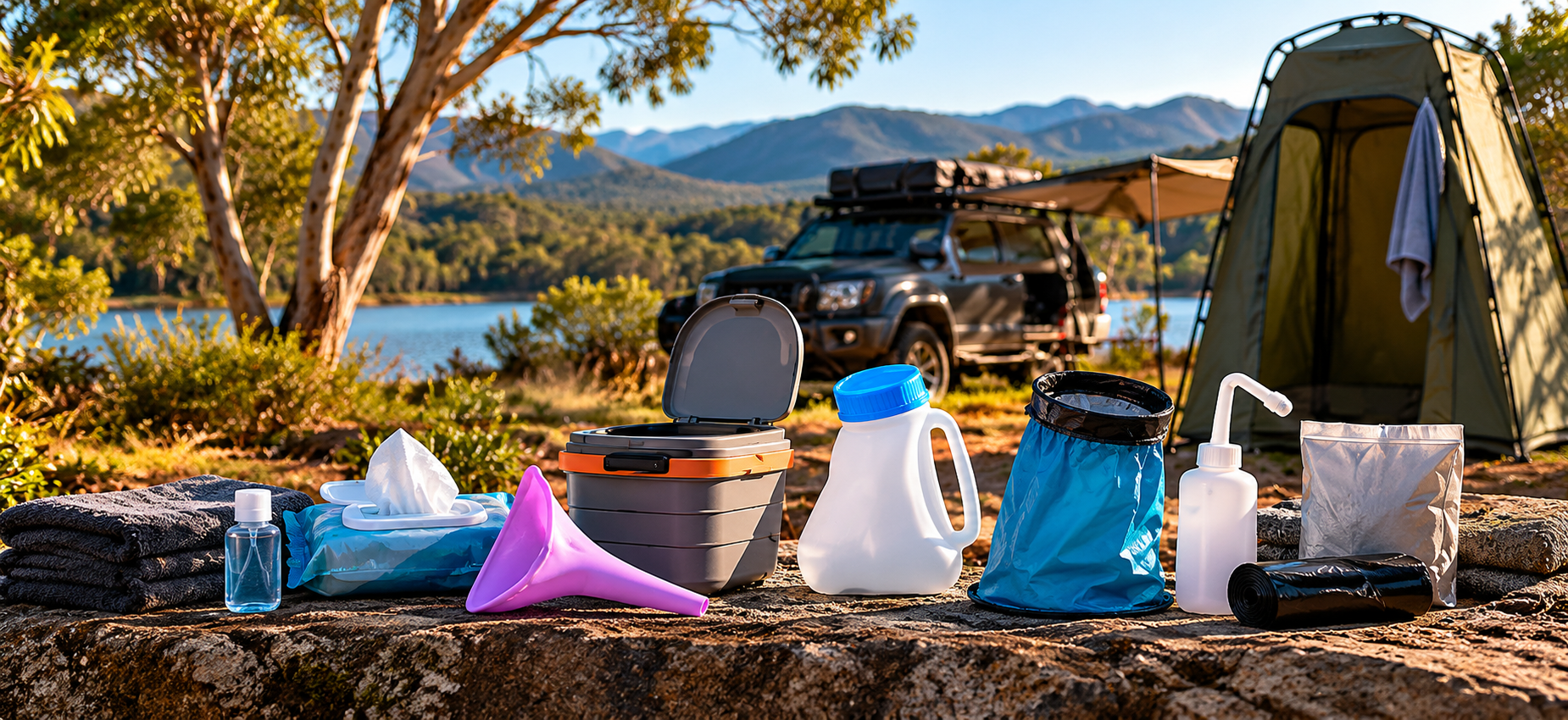
Maintaining personal hygiene when camping, caravanning or travelling in remote areas takes a bit of planning. When showers, toilets and running water are unavailable or limited, having the right gear makes a significant difference to comfort and health. This guide covers the practical hygiene products that experienced Australian campers and 4WD tourers carry — from portable urinals and body wipes to privacy tents and waste disposal bags. These products are not substitutes for normal hygiene facilities, but they help you stay clean and comfortable when those facilities are not available.
Affiliate disclosure: We may earn a commission if you purchase through our links, at no extra cost to you. Learn more.
Why Personal Hygiene Gear Matters When Camping
Remote camping, 4WD touring and extended caravanning often mean spending days or weeks without access to showers, flushing toilets or running water. Even well-equipped campsites may have limited or shared facilities. In national parks, remote stations and bush camps, facilities may be non-existent.
Poor hygiene in these conditions can lead to discomfort, skin irritation and illness — particularly in hot weather or when physical activity is high. Having the right gear allows you to manage personal hygiene effectively without relying on fixed infrastructure.
The products covered in this guide are designed for short-to-medium periods when normal facilities are unavailable. They are practical additions to a camping or touring kit, not permanent replacements for normal hygiene routines.
Female Urination Devices
Female urination devices (FUDs) — sometimes called stand-to-pee devices — allow women to urinate while standing, without removing clothing. Products like the Shewee and similar designs are widely used by hikers, campers, festival-goers and travellers.
For camping and 4WD touring, a FUD is useful when toilet facilities are absent, when stopping on the roadside, or when privacy is limited. They are particularly practical in cold weather when removing layers is inconvenient, or in dusty or muddy conditions where squatting is difficult.
Most FUDs are made from flexible silicone or rigid plastic and are reusable. They pack flat or into a small case and can be rinsed clean with water. Disposable single-use options are also available for travel situations where cleaning is not practical.
Choosing the right FUD is largely a matter of personal fit and preference. Silicone models are generally more flexible and adaptable; rigid models may provide a more consistent seal. Most products include a small carry pouch. Practise using a FUD at home before relying on it in the field.
Male Urinal Bottles
Portable male urinal bottles are a practical item for camping, caravanning, long road trips and overnight use. They allow urination without leaving a tent, vehicle or sleeping area — useful during cold nights, when facilities are distant, or when mobility is limited.
Key features to look for include adequate capacity (typically 500 ml to 1 litre), a secure leak-proof lid, a wide opening for ease of use, and a material that is easy to clean and does not retain odour. Most urinal bottles are made from HDPE plastic or silicone. Some models include a measurement scale, which is useful in medical contexts.
For camping use, choose a bottle with a clearly distinguishable lid colour or shape to avoid confusion with water bottles. Store it in a dedicated bag or compartment. Clean thoroughly after each use with water and a small amount of soap or a dedicated cleaning tablet. Allow to dry before storing to prevent odour.
Unisex Travel Urinals
Collapsible and portable unisex travel urinals are designed for use in vehicles, tents or other confined spaces. They are typically made from silicone or flexible plastic and fold flat for storage. Some models include a funnel attachment to accommodate different users.
Unisex travel urinals are useful for long drives through remote areas where stopping is inconvenient, for overnight vehicle camping, and as a backup option when other facilities are unavailable. They are generally smaller in capacity than dedicated male urinal bottles, so check the capacity before purchasing if extended use is anticipated.
As with all portable urinal products, clean thoroughly after each use and store dry.
Staying Clean When You Cannot Shower
When shower facilities are unavailable, body wipes and no-rinse wash products allow you to maintain basic cleanliness between showers. These products are useful for short periods — a few days of camping or touring — but are not a long-term substitute for normal bathing.
Body wipes designed for camping or outdoor use are typically larger than standard wet wipes and are formulated to remove sweat, dirt and odour from skin. Look for wipes that are alcohol-free and suitable for sensitive skin, particularly for use on the face and body. Biodegradable wipes are widely available, but note that even biodegradable wipes should be packed out and disposed of in a bin — do not bury or leave them in the environment, as they do not break down quickly in dry Australian conditions.
No-rinse body wash products are applied to damp skin and wiped off without rinsing. They are useful when water is scarce. Hand sanitiser and antibacterial hand wipes are important for food preparation and after toilet use when running water is unavailable. Carry a small bottle of hand sanitiser in an accessible location in your vehicle or pack.
Portable Bidets
Portable bidets are simple squeeze-bottle or pump devices that provide a directed stream of water for personal cleaning after toilet use. They are widely used by travellers and campers as a more hygienic and environmentally friendly alternative to toilet paper alone.
The most common portable bidet is a simple squeezable plastic bottle with an angled nozzle. Fill with water, squeeze to direct a stream. Some models use a pump mechanism for more controlled flow. Capacity is typically 150–400 ml — sufficient for one or two uses.
Portable bidets require a small amount of water per use, which makes them practical for most camping situations where water is carried. They pack small and are lightweight. Clean the nozzle after each use. A portable bidet is a simple, low-cost addition to a camping hygiene kit.
Privacy Tents
A privacy tent (also called a change tent or toilet tent) provides an enclosed space for toilet use, showering, changing clothes or washing. For campers using portable toilets, urinals or camp showers, a privacy tent is a practical way to maintain privacy at a campsite.
Privacy tents are typically made from lightweight polyester with a zip door and ventilation panels. They set up quickly using a pop-up or pole frame and pack into a carry bag. Key features to consider include packed size and weight (important for 4WD touring where space is limited), setup speed, ventilation (important in hot weather), stability in wind, and floor type (a sewn-in floor keeps insects and dirt out).
For use with a portable toilet, choose a tent with enough internal height and floor space to use the toilet comfortably. Most privacy tents are designed for a single person. Peg the tent down in windy conditions — an unpegged privacy tent will blow over. Some models include a small storage pocket for toilet paper and hygiene supplies.
Waste Bags & Responsible Disposal
Responsible waste disposal is an important part of camping and remote travel in Australia. When toilet facilities are absent, waste must be managed and disposed of correctly.
Toilet waste bags are designed for use with portable toilets or as standalone waste bags. They typically include a gelling agent or absorbent material that solidifies liquid waste, reducing odour and the risk of spills. Sealable disposal bags allow used waste bags to be sealed and stored securely until they can be disposed of in a bin or at a dump point.
For general rubbish including used wipes, packaging and other hygiene waste, carry sealable bags and a dedicated rubbish container in your vehicle. Pack out all waste — do not bury or burn hygiene waste.
Always follow the rules for the campground, national park, council area or land you are visiting. Some areas require the use of specific waste containment systems. Check the requirements before you travel. Wipes labelled as biodegradable should still be packed out and disposed of in a bin — do not bury or leave them in the environment.
Portable Hygiene Products — Quick Comparison
| Product | Best Use | Reusable? | Water Required? | Packed Size | Key Consideration |
|---|---|---|---|---|---|
| Female urination device | Outdoor urination while standing | Yes (most models) | No | Very small | Fit and practice before field use |
| Male urinal bottle | Camping, vehicle, overnight use | Yes | No | Small–medium | Secure lid, easy to clean |
| Unisex travel urinal | Vehicle, tent, confined spaces | Yes | No | Very small (collapsible) | Check capacity for extended use |
| Body/no-rinse wipes | Cleaning when shower unavailable | No (single use) | No | Flat pack | Pack out all used wipes |
| Portable bidet | Personal cleaning after toilet use | Yes | Yes (small amount) | Very small | Clean nozzle after each use |
| Privacy tent | Toilet, shower, changing privacy | Yes | No | Medium (carry bag) | Peg down in wind; check floor type |
Affiliate Disclosure: Country Heart Outdoors participates in affiliate programs. If you purchase through our links, we may earn a commission at no extra cost to you. This helps support our free buying guides.