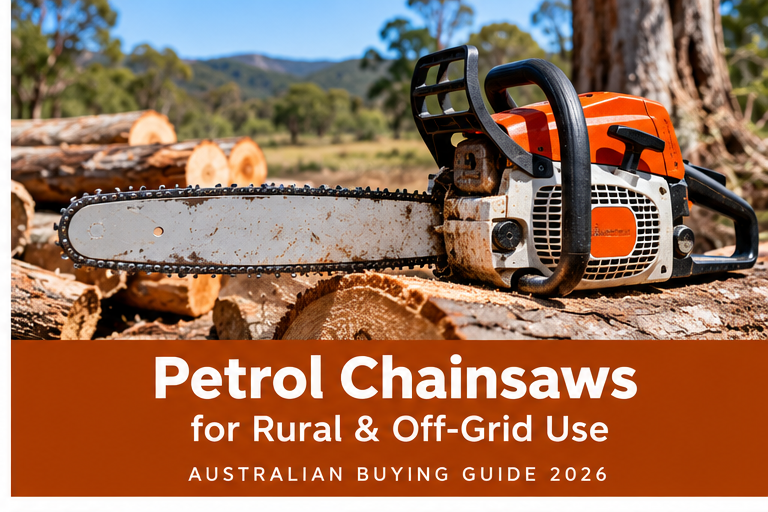
Petrol Chainsaws for Rural & Off-Grid Use — Australian Buying Guide 2026
Petrol chainsaws remain the standard choice for sustained heavy cutting on rural properties, farms and remote land. They do not depend on battery charge, can run continuously with a fuel supply and are available in a wide range of sizes suited to everything from light pruning to large-diameter timber. Compared with battery models, petrol chainsaws generally offer more power for extended or heavy-duty work, but they require more maintenance, produce exhaust fumes, are louder and involve fuel handling and mixing. For occasional light use, a battery chainsaw may be more convenient. For regular heavy work on a rural block — firewood cutting, storm cleanup, land clearing — a petrol chainsaw is often the more practical tool. This guide covers the key factors to consider when choosing a petrol chainsaw for Australian rural and off-grid use. Always follow the manufacturer's instructions. Obtain appropriate training before operating any chainsaw. Do not attempt to fell trees without proper training and experience.
Affiliate disclosure: We may earn a commission if you purchase through our links, at no extra cost to you. Learn more.
Engine Size
Petrol chainsaw engine size is measured in cubic centimetres (cc). Smaller engines in the 30–40cc range suit light to medium work — pruning, limb removal and smaller logs. Mid-range engines in the 40–55cc range handle most rural property tasks including regular firewood cutting and storm cleanup. Larger engines above 55cc are suited to heavy-duty work including large-diameter timber. For most rural property owners, a 40–50cc saw with a 40–45cm bar covers the majority of tasks.
Bar Length
Bar length should be matched to the typical diameter of timber you cut. A bar that is too short for the timber requires multiple cuts or repositioning. A bar that is too long for the engine reduces efficiency and increases fatigue. As a general guide, a 40cm bar suits logs up to around 35cm in diameter, a 45cm bar suits logs up to around 40cm, and a 50cm bar suits larger timber. For most rural firewood and property work, a 40–45cm bar is a practical choice.
Two-Stroke Fuel and Oil
Most petrol chainsaws use a two-stroke engine that requires a fuel-oil mixture. The correct ratio is specified by the manufacturer — commonly 50:1 (50 parts petrol to 1 part two-stroke oil) but this varies between models. Always use the manufacturer's recommended ratio and a quality two-stroke oil. Using the wrong ratio or incorrect oil can damage the engine. Pre-mixed two-stroke fuel is available and eliminates mixing errors, though it is more expensive than mixing your own. Fuel should be used within the manufacturer's recommended timeframe — stale fuel can cause starting and running problems.
Starting Systems
Most petrol chainsaws use a recoil (pull-cord) starter. Some models include a decompression valve or primer bulb to make starting easier. Easy-start systems reduce the effort required on the pull cord. Electronic ignition systems on modern saws generally provide reliable starting when the saw is correctly maintained and the fuel is fresh. Cold-start procedures vary between models — follow the manufacturer's instructions.
Vibration and Noise
Petrol chainsaws produce significant vibration and noise. Prolonged exposure to vibration can contribute to hand-arm vibration syndrome (HAVS). Anti-vibration systems on modern saws reduce but do not eliminate vibration. Hearing protection is essential — petrol chainsaws typically produce noise levels well above safe exposure limits without protection. Limit continuous operating time and take regular breaks.
Maintenance
Regular maintenance is essential for safe and reliable operation. Key maintenance tasks include air filter cleaning and replacement, spark plug inspection and replacement, chain sharpening, bar maintenance, chain tensioning, bar oil reservoir checks, fuel system inspection and general cleaning. Follow the manufacturer's service schedule. A well-maintained saw starts reliably, cuts efficiently and lasts significantly longer than a neglected one.
Chain Sharpening
A sharp chain is essential for efficient and safe cutting. A dull chain requires more force, produces more sawdust than chips, causes the saw to work harder and increases the risk of kickback. Chains can be sharpened with a round file of the correct diameter for the chain pitch, using a filing guide to maintain the correct angle. Electric chain sharpeners are also available. For those who prefer not to sharpen chains themselves, replacement chains are available from most chainsaw dealers.
Spare Parts and Remote-Area Suitability
For remote property use, carrying a spare chain, spark plug, air filter and fuel filter is practical. Major brands including Husqvarna, Stihl, Echo and Oregon have established dealer networks in Australia, which generally means parts and service are accessible. Less common brands may have limited parts availability in rural areas. Consider parts availability when choosing a brand for remote or off-grid use.
Rural Property and Storm Cleanup Use
Petrol chainsaws are well suited to rural property tasks including firewood cutting, clearing fallen timber after storms, removing dead trees and branches, and general land management. For these tasks, a mid-range 40–50cc saw with a 40–45cm bar provides a good balance of power, weight and manageability. Heavier saws offer more power but increase fatigue during extended use.
Protective Equipment and Safety
Chainsaw use requires appropriate personal protective equipment (PPE). At minimum, this includes chainsaw-rated protective trousers or chaps, safety boots with chainsaw protection, gloves, eye protection, hearing protection and a helmet with face shield. Chainsaw operation carries serious risks. Always follow the manufacturer's instructions. Recognised chainsaw training courses are available in Australia — obtain appropriate training before operating a chainsaw. Do not attempt to fell trees without proper training and experience. Keep bystanders well clear of the work area at all times.
Petrol Chainsaw Engine Size Guide
| Engine Size | Typical Bar Length | Best Suited To | Weight Range |
|---|---|---|---|
| 30–40cc | 30–40cm | Light pruning and limb removal | 3.5–4.5kg |
| 40–50cc | 40–45cm | General rural property and firewood | 4.5–5.5kg |
| 50–60cc | 45–50cm | Heavy firewood and larger timber | 5.5–6.5kg |
| 60cc+ | 50cm+ | Professional and large-diameter timber | 6.5kg+ |
Affiliate Disclosure: Country Heart Outdoors participates in affiliate programs. If you purchase through our links, we may earn a commission at no extra cost to you. This helps support our free buying guides.