Pet Restraints, Harnesses & Vehicle Travel Gear — Australian Buying Guide 2026
Travelling with a dog or other companion animal in a vehicle requires more thought than simply letting them ride loose in the back seat. An unrestrained animal in a moving vehicle is a safety risk — to the animal, to the driver and to other road users. Pet transport requirements vary between Australian states and territories and should be checked before travel, as rules differ across jurisdictions. This guide covers the main types of vehicle restraint and travel gear for dogs and other companion animals, the factors that affect safety and comfort, and the practical considerations for choosing the right setup for your vehicle and your animal.
Affiliate disclosure: We may earn a commission if you purchase through our links, at no extra cost to you. Learn more.
Vehicle Harnesses and Seat-Belt Attachments
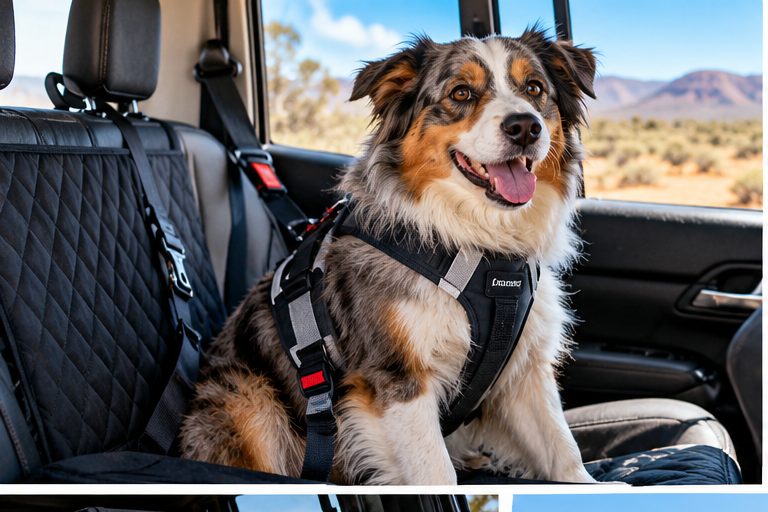
A vehicle harness is designed to restrain a dog in a seat using the vehicle's existing seat-belt system. The harness attaches to the seat belt via a short tether, limiting movement in the event of sudden braking or a collision.
It is important to understand that an ordinary walking harness is not automatically suitable as a vehicle restraint. Walking harnesses are designed to distribute pulling force across the chest and shoulders during lead walking — they are not crash-tested for vehicle use. A purpose-designed vehicle harness uses reinforced webbing, padded panels and attachment points engineered to withstand the forces involved in a vehicle collision or emergency stop.
When selecting a vehicle harness, look for models that have been crash-tested to a recognised standard. Check the manufacturer's sizing guide carefully — a harness that is too loose will not restrain the animal effectively, and one that is too tight will cause discomfort. Measure your dog's chest girth and weight and compare against the manufacturer's sizing chart before purchasing.
Travel Crates
A travel crate provides a contained, enclosed space for a dog or cat during vehicle travel. Crates can be secured in the boot, on the back seat or in the cargo area of an SUV or wagon. A secured crate prevents the animal from moving around the vehicle and provides some protection in a collision.
Crates for vehicle travel should be secured to prevent movement — an unsecured crate can become a projectile in a collision. Securing methods include cargo straps, seat-belt attachments and purpose-designed crate anchors. Ensure the crate is large enough for the animal to stand, turn around and lie down comfortably, but not so large that the animal is thrown around inside it.
Hard-sided crates offer more protection than soft-sided crates in a collision. Soft-sided crates are lighter and easier to store but provide less structural protection. For long trips, ventilation and the ability to attach a water bowl to the crate door are practical considerations.
Cargo Barriers
A cargo barrier is a metal or mesh partition fitted between the rear cargo area and the passenger cabin of a wagon, SUV or ute. It prevents a dog in the cargo area from entering the passenger cabin in the event of sudden braking or a collision, and prevents the animal from distracting the driver.
Cargo barriers are available as universal-fit or vehicle-specific models. Vehicle-specific barriers generally provide a better fit and more secure attachment. A barrier does not restrain the animal within the cargo area — it only prevents the animal from entering the cabin. For full restraint, a harness or crate within the cargo area is also required.
Back-Seat Hammocks and Seat Covers
Back-seat hammocks attach to the front and rear headrests, creating a hammock-style surface that prevents a dog from falling into the footwell and protects the seat upholstery. They are not a restraint system — they do not prevent the animal from being thrown forward in a collision. A hammock is best used in combination with a harness or crate.
Seat covers protect upholstery from hair, mud, water and scratches. Waterproof seat covers are practical for dogs that swim or travel in wet conditions. Look for covers that allow access to seat-belt buckles and do not interfere with seat-belt operation.
Ute and Wagon Travel
Transporting a dog in the tray of a ute requires specific consideration. An animal in an open ute tray is exposed to wind, road debris, sun and temperature extremes, and is at risk of falling or jumping from the vehicle. A secured crate or purpose-designed ute cage provides containment and protection. Tethering an animal directly to the tray without a crate or cage is not recommended — a tethered animal can be dragged alongside the vehicle if it falls or jumps.
For wagon and SUV travel with the rear cargo area open, a cargo barrier combined with a harness or crate provides the most practical combination of containment and restraint.
Sizing and Adjustment
Correct sizing is critical for both safety and comfort. A harness that is too loose will not restrain the animal effectively; one that is too tight will cause discomfort and restrict breathing. Measure your dog's chest girth (the widest point behind the front legs) and neck circumference, and compare against the manufacturer's sizing chart. Most quality harnesses have multiple adjustment points to allow a precise fit.
For crates, measure the animal's length (nose to base of tail), height (floor to top of head) and width (widest point). Add approximately 10cm to each dimension to determine the minimum crate size for comfortable travel.
Attachment Points and Durability
Check the attachment points on any harness or crate securing system. Attachment points should be reinforced and rated for the weight of the animal. Cheap plastic clips and thin webbing are not adequate for vehicle restraint. Look for metal hardware, reinforced stitching and webbing rated to a load appropriate for your animal's weight.
For long-term use, consider how easy the harness is to clean. Removable, washable padding and quick-release buckles make cleaning easier. Harnesses used in wet or muddy conditions should be dried thoroughly before storage to prevent mould and deterioration.
Escape Prevention
Some dogs are skilled at escaping from harnesses or crates. A dog that escapes its restraint during a journey is a serious safety hazard. Before relying on any restraint system for a long trip, test it in a controlled environment — allow the dog to wear the harness or spend time in the crate at home before using it in the vehicle. Check all buckles, clips and adjustment points before each journey.
Long-Trip Comfort Stops
On long journeys, plan regular stops to allow the animal to stretch, toilet and drink. The frequency of stops depends on the animal's age, health and temperament. Puppies, elderly dogs and animals with health conditions may need more frequent stops. Carry sufficient water for the animal and offer water at each stop. In hot weather, ensure the vehicle is adequately ventilated and never leave an animal unattended in a parked vehicle.
Vehicle Travel Restraint Options Compared
| Option | Restraint Level | Best For | Notes |
|---|---|---|---|
| Vehicle harness | Moderate | Seat travel, most dogs | Must be crash-tested design |
| Hard crate (secured) | High | All sizes, long trips | Requires securing in vehicle |
| Soft crate (secured) | Moderate | Smaller dogs, short trips | Less structural protection |
| Cargo barrier | Cabin separation only | Wagons, SUVs, utes | Combine with harness or crate |
| Back-seat hammock | None (comfort only) | Seat protection | Use with harness |
Affiliate Disclosure: Country Heart Outdoors participates in affiliate programs. If you purchase through our links, we may earn a commission at no extra cost to you. This helps support our free buying guides.