Instant Gas Hot Water Heaters: Buyer's Guide
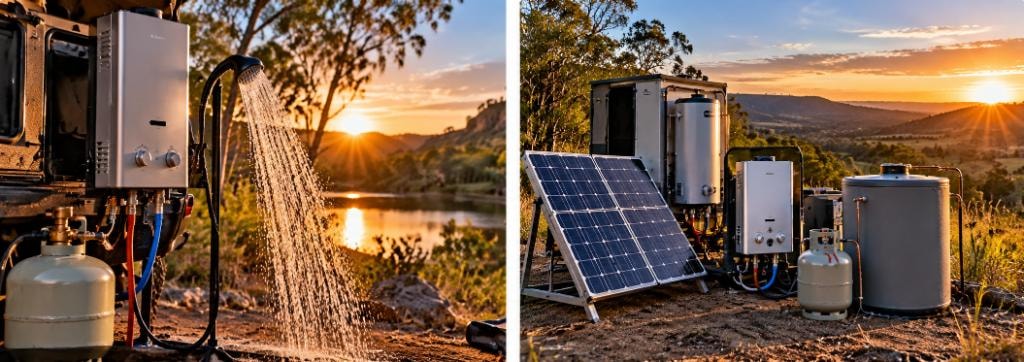
Instant gas hot-water heaters have become a widely used way to get a reliable hot shower off-grid. They heat water on demand using LPG, produce no hot-water wait time, and pack down small enough to fit in a caravan boot or ute tray. This guide covers how they work, what the key specifications mean, and what to check before you buy.
Affiliate disclosure: We may earn a commission if you purchase through our links, at no extra cost to you. Learn more.
How Instant LPG Hot-Water Heaters Work
An instant gas hot-water heater — sometimes called a continuous-flow or tankless heater — ignites a gas burner the moment water starts flowing through the unit. Cold water passes through a heat exchanger above the burner and exits as hot water at the outlet. Because there is no storage tank, you are not limited by tank capacity; the heater produces hot water for as long as gas and water supply are available. Most portable units use a piezo or battery-powered ignition and shut the burner off automatically when water flow stops.
Typical Flow Rates
Flow rate is measured in litres per minute (L/min) and determines how much hot water the unit can deliver at a usable temperature. Portable camping units typically range from around 5 L/min to 8 L/min. Residential continuous-flow systems can reach 16–20 L/min or more, but those are mains-pressure units not suited to off-grid use. For a single outdoor shower, 5–6 L/min is generally adequate. If you need to run two outlets simultaneously — for example, a shower and a kitchen tap — look for a higher-flow unit or plan to use them one at a time.
Minimum Activation Flow
Every instant gas heater has a minimum activation flow rate — the minimum water flow required to trigger the ignition and open the gas valve. If water pressure or flow drops below this threshold, the burner will not light or will cut out mid-shower. On most portable units this is around 0.5–1.0 L/min, though it varies by model. When running from a 12V pump or gravity-fed tank, confirm your pump's flow rate at the expected head height exceeds the heater's minimum activation flow with some margin.
Water Pressure Requirements
Portable gas heaters are designed to operate at low to moderate water pressure, which makes them compatible with 12V pumps, gravity tanks and caravan water systems. Most units specify a working pressure range — commonly 10–110 PSI or similar — and will not function correctly outside that range. Very low pressure may prevent activation; very high pressure can damage seals. If you are connecting to a mains water supply at a powered site, a pressure-limiting valve is worth fitting to protect the unit.
LPG Bottle and Regulator Requirements
Most portable hot-water heaters connect to a standard LPG bottle via a low-pressure regulator. The regulator reduces bottle pressure to the operating pressure the heater requires — typically around 2.75 kPa for Australian-standard low-pressure appliances, though some units specify a different pressure, so always check the manufacturer's documentation. Use a regulator rated for the heater's gas consumption. A standard 4 kg or 9 kg LPG bottle is the most common choice for camping; larger bottles suit extended off-grid stays. Always store and transport LPG bottles upright and in a ventilated space.
Temperature Control
Most portable units offer temperature adjustment via a dial or knob that controls gas flow to the burner. Turning the gas up raises the outlet temperature; turning it down lowers it. Outlet temperature also varies with incoming water temperature and flow rate — faster flow means less time over the burner and a lower outlet temperature. In cold weather, you may need to reduce flow rate to maintain a comfortable shower temperature. Some units include a thermostatic control that holds a set temperature more consistently, which is a useful feature if the water supply temperature varies.
Outdoor Use and Ventilation Requirements
Portable LPG hot-water heaters are designed for outdoor use only. They produce combustion gases including carbon monoxide and must never be operated in an enclosed space such as a tent, caravan interior, or garage. Always position the unit in a well-ventilated outdoor area, away from flammable materials, and ensure the exhaust flue is unobstructed. Most units have a rain shield or are rated for outdoor use, but check the manufacturer's IP rating if you expect to use the unit in wet conditions. Wind can affect burner performance; a sheltered position or a wind guard helps maintain consistent operation.
Suitability for Camping, Caravans and Off-Grid Properties
Instant gas heaters suit a wide range of off-grid applications. For camping and overlanding, compact units that run from a small LPG bottle and a 12V pump are the most practical option. For caravans and motorhomes, a semi-permanent mount with a dedicated gas line and a 12V or 240V pump is common. For off-grid properties, a higher-capacity unit with a larger LPG tank or reticulated gas supply provides more consistent performance. In all cases, the key variables are gas supply capacity, water pump flow rate, and whether the unit's minimum activation pressure is compatible with your water system.
Advantages and Disadvantages
The main advantages of instant gas heaters are unlimited hot water on demand, no tank heat-up wait, compact size relative to storage systems, and independence from mains power for heating. The main disadvantages are reliance on LPG supply, outdoor-only operation, sensitivity to low water pressure, and the need to manage gas bottle weight and refill logistics on extended trips. In very cold conditions, incoming water temperature can make it difficult to reach comfortable shower temperatures at normal flow rates without reducing flow significantly.
What to Check Before Buying
Before purchasing an instant gas hot-water heater, confirm the following: the unit's minimum activation flow rate is compatible with your pump or water supply; the required regulator pressure matches standard Australian LPG regulators or is available locally; the unit is rated for outdoor use; the gas consumption rate suits your bottle size and trip length; the flow rate is adequate for your intended use; and the unit includes or is compatible with the fittings needed to connect to your water system and gas supply. Check whether the unit requires batteries for ignition and what size. Read the installation and safety instructions before first use.
Instant Gas Heater Key Specs at a Glance
| Specification | Typical Portable Unit | Why It Matters |
|---|---|---|
| Flow rate | 5–8 L/min | Determines hot-water delivery volume |
| Min. activation flow | 0.5–1.0 L/min | Must be met by your pump or gravity supply |
| Working pressure | 10–110 PSI (varies) | Must match your water system pressure |
| Gas type | LPG (propane/butane blend) | Requires correct regulator for AU standard |
| Regulator pressure | Check manufacturer spec | Incorrect regulator affects performance and safety |
| Ignition | Piezo or battery | Battery ignition is more reliable in cold/wet conditions |
| Use environment | Outdoor only | Never use in enclosed spaces — combustion gases |
Affiliate Disclosure: Country Heart Outdoors participates in affiliate programs. If you purchase through our links, we may earn a commission at no extra cost to you. This helps support our free buying guides.