First Aid Kits for Camping, 4WD & Remote Travel — Australian Buying Guide 2026
When you're camping, caravanning or exploring remote Australia by 4WD, the nearest hospital or medical centre can be hours away. A well-stocked, well-organised first aid kit is one of the most important pieces of gear you can carry — not just for minor cuts and scrapes, but for managing more serious situations until professional help arrives. This guide covers how to choose the right size kit for your trip, what essential items every kit should contain, and what to look for when buying a first aid kit for Australian outdoor conditions.
Affiliate disclosure: We may earn a commission if you purchase through our links, at no extra cost to you. Learn more.
Choosing the Right Size First Aid Kit
First aid kits come in a range of sizes, and choosing the right one depends on the number of people in your group, the remoteness of your destination and how long you'll be away.
**Small personal kits** are compact and lightweight — ideal for day hikes, solo travellers or as a backup kit in a pack or glovebox. They typically cover minor injuries: adhesive dressings, antiseptic wipes, a few bandages and basic wound care. They're not designed for extended remote travel or group use.
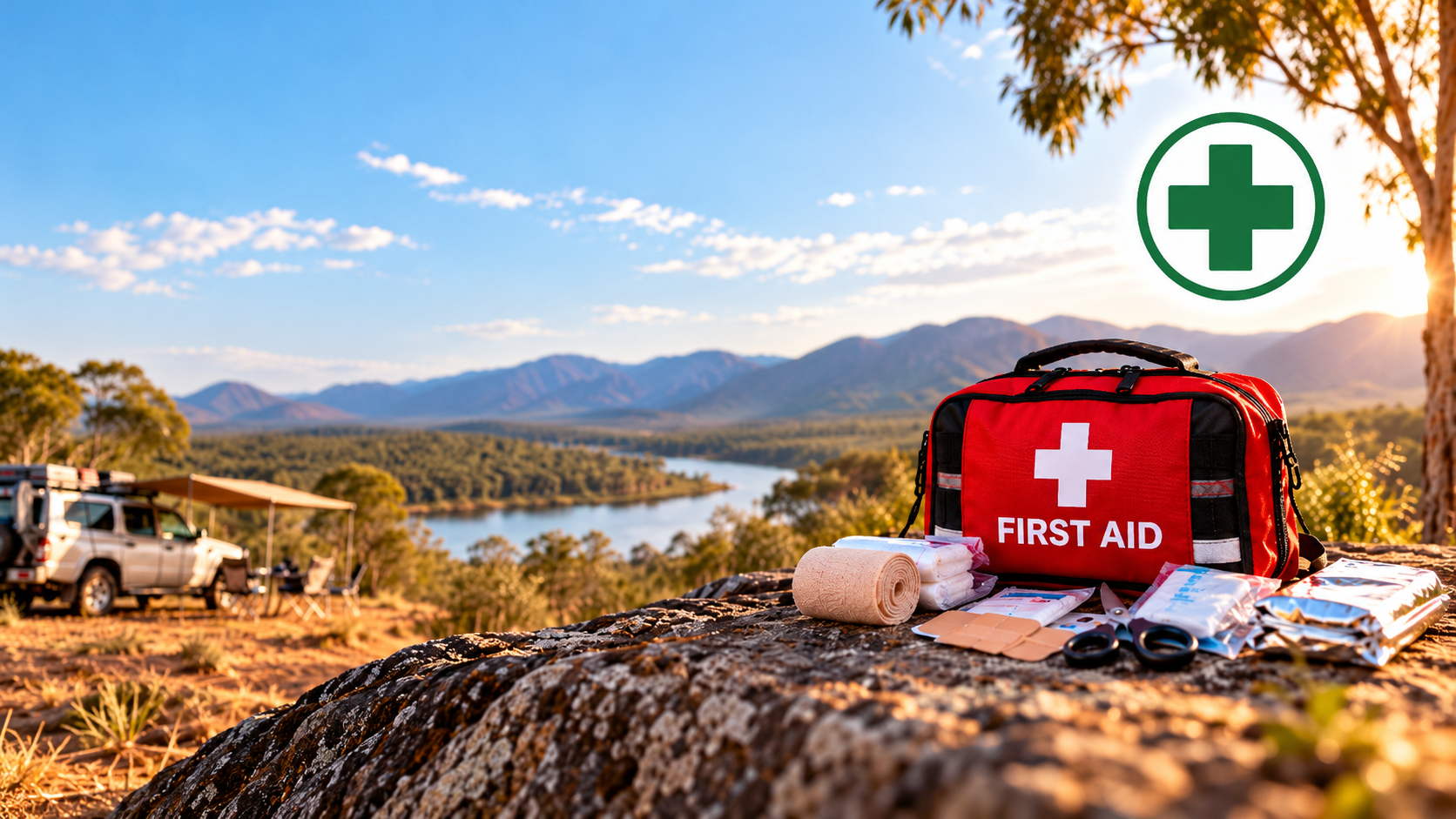
**Vehicle and camping kits** are the most practical choice for 4WD tourers, caravanners and family campers. These mid-sized kits are designed to handle a broader range of injuries and include more substantial wound dressings, bandages, gloves and additional supplies. They're usually stored in a durable, clearly labelled case that can be mounted in a vehicle or stored in a camp kitchen box.
**Larger family or group kits** are suited to extended remote trips, large groups or situations where you're acting as a base camp for multiple people. These kits carry more of everything and may include additional items for managing serious injuries over a longer period before evacuation.
When choosing any kit, look for:
- **Waterproof or water-resistant storage** — Australian conditions can be harsh, and a kit that gets wet is a kit that fails when you need it - **Durable, rigid or semi-rigid case** — protects contents from being crushed in a packed vehicle - **Clear organisation** — labelled compartments or colour-coded pouches so you can find what you need quickly under stress - **Easy access** — a kit buried under gear is a kit you can't reach in an emergency; store it somewhere accessible and make sure everyone in your group knows where it is
Essential First Aid Kit Contents
A well-stocked kit for camping, 4WD touring or remote travel should include the following basics as a minimum:
**Wound care** - Adhesive dressings (assorted sizes) - Sterile wound dressings (non-adherent pads) - Gauze swabs and gauze rolls - Wound closure strips or butterfly closures - Saline solution or saline pods (for wound irrigation and eye washing) - Antiseptic solution or wipes
**Bandaging** - Crepe bandages (assorted widths) - Triangular bandages (for slings and immobilisation) - Conforming bandages
**Protective equipment** - Disposable nitrile gloves (multiple pairs — latex-free) - CPR face shield or pocket mask
**Tools and accessories** - Scissors (blunt-nosed, suitable for cutting clothing or bandages) - Tweezers (for splinter and tick removal) - Safety pins - Instant cold pack - Thermal or emergency shock blanket - First aid instruction booklet or reference card
**Ongoing kit maintenance**
A first aid kit is only useful if it's ready to use. After any trip — or at least regularly and before major trips — check your kit and:
- **Replace any used items** immediately so the kit is always fully stocked - **Check expiry dates** on dressings, saline, antiseptic and any other dated items, and replace anything that has expired - **Inspect packaging** for damage, moisture or contamination
Personal medications — including prescription medicines, adrenaline autoinjectors, asthma inhalers or any other condition-specific treatments — should be carried separately in a clearly labelled, accessible location. Do not rely on a standard first aid kit to cover personal medical needs.
First Aid for Remote Australian Travel
Travelling in remote Australia — whether by 4WD, caravan or on foot — means you may be a long way from the nearest medical facility. A few practical steps before and during your trip can make a significant difference.
**Carry enough supplies for your group** A single small personal kit is not adequate for a group of four on a two-week remote trip. Scale your kit to the number of travellers and the length of your journey. If you're travelling with children, elderly passengers or anyone with a known medical condition, consider carrying additional relevant supplies.
**Keep the kit accessible** A first aid kit stored at the bottom of a packed trailer or buried under camping gear is not useful in an emergency. Store it somewhere you can reach quickly — ideally in a consistent, known location in your vehicle that every member of your group is aware of.
**Check contents before every major trip** Before you leave, open the kit and check it. Confirm that used items have been replaced, expiry dates are current and nothing is damaged or missing. A pre-trip check takes a few minutes and ensures the kit is actually ready when you need it.
**Carry personal medications separately** Prescription medicines, adrenaline autoinjectors, asthma inhalers and any other personal or condition-specific treatments should be carried as directed, kept clearly labelled and accessible — separate from the general first aid kit. Make sure other members of your group know where these are kept.
**Consider communication equipment for remote areas** When travelling outside mobile phone coverage, a Personal Locator Beacon (PLB) or satellite communicator can be critical for summoning emergency assistance. A PLB is a one-way distress signal registered with AMSA; a satellite communicator allows two-way messaging and tracking. Both are worth considering for remote Australian travel. See our guides on PLBs, EPIRBs and satellite communicators for more detail.
Snake Bite Preparedness
Australia is home to some of the world's most venomous snakes, and encounters in the bush, on campsites and around waterways are not uncommon. While the risk of a serious bite is relatively low, being prepared is sensible for anyone spending time outdoors in Australia.
**Compression bandages** Treat any suspected Australian snake bite as potentially life-threatening and call Triple Zero (000) immediately. Australian first aid guidelines recommend the pressure immobilisation technique for most Australian snake bites. This requires wide compression bandages — ideally conforming or crepe bandages — applied firmly over the bite site and along the affected limb. Ensure your kit contains enough suitable bandages and that you know how to apply them correctly.
**Training matters** Knowing what to do in a snake bite emergency — and what not to do — is as important as having the right equipment. Outdated advice such as cutting the wound, sucking out venom or applying a tourniquet is harmful and should not be followed. Current Australian first aid guidance recommends pressure immobilisation, keeping the patient calm and still, and seeking emergency medical assistance as quickly as possible.
We strongly encourage anyone spending time in the Australian outdoors to undertake a recognised first aid course from a registered training provider. Practical training ensures you can apply techniques correctly under pressure, not just in theory.
**Stay informed** First aid guidelines are updated periodically. Follow current guidance from recognised Australian first aid authorities and keep your training current.
First Aid Kit Size Comparison
| Kit Type | Best For | Typical Contents | Storage | Portability |
|---|---|---|---|---|
| Small Personal Kit | Solo travellers, day hikes, glovebox backup | Basic dressings, antiseptic, a few bandages | Small pouch or soft case | Very portable — fits in a pack or bag |
| Vehicle & Camping Kit | 4WD tourers, caravanners, family campers | Full wound care, bandages, gloves, cold pack, CPR mask | Rigid or semi-rigid labelled case | Designed for vehicle storage |
| Family / Group Kit | Large groups, extended remote trips, base camps | Comprehensive supplies for multiple people over extended periods | Large rigid case, often wall-mountable | Less portable — suited to camp or vehicle base |
Affiliate Disclosure: Country Heart Outdoors participates in affiliate programs. If you purchase through our links, we may earn a commission at no extra cost to you. This helps support our free buying guides.