
Satellite Communications & GPS
Stay connected and navigate safely in remote Australia — from PLBs and satellite communicators to sat phones and handheld GPS units.
Staying Safe and Connected Off the Grid
When you head into remote Australia — whether you're 4WD touring the outback, camping in the high country, boating offshore or working on a remote property — mobile phone coverage disappears fast. That's where satellite communications and GPS devices become essential safety gear, not optional extras.
The right device depends on what you need: emergency-only protection, two-way messaging with family back home, full voice calls, or detailed offline mapping. This guide breaks down the four main categories — PLBs, satellite communicators, satellite phones and handheld GPS units — so you can choose the right gear for your trip.
PLBs — Emergency-Only, No Subscription
A Personal Locator Beacon (PLB) is the most basic — and most important — piece of safety gear for remote travel. When activated, it transmits a distress signal via the Cospas-Sarsat satellite network directly to Australian Search and Rescue (AMSA). There are no subscriptions, no monthly fees and no apps.
PLBs are registered to you personally through AMSA's free BEACONS registration system. When triggered, rescue services know exactly who you are and where you are. Battery life typically lasts 7+ years in standby and 24+ hours when activated. They're waterproof, rugged and designed to work in the harshest Australian conditions.
The key limitation: PLBs are one-way, emergency-only devices. You can't send a message, check in with family or receive weather updates. They're a last resort, not a communication tool. Every remote traveller should carry one regardless of what other devices they have.
Satellite Communicators — Two-Way Messaging Anywhere
Satellite communicators like the Garmin inReach series and SPOT devices bridge the gap between emergency-only PLBs and full satellite phones. They let you send and receive text messages, share your GPS location with family and friends, and trigger an SOS if things go wrong — all via satellite networks that cover the entire globe.
Most satellite communicators require a monthly or annual subscription plan. Entry-level plans typically allow a set number of messages per month, while higher-tier plans offer unlimited messaging and more frequent location tracking intervals. For most recreational travellers, a mid-range plan is more than sufficient.
Garmin inReach devices also integrate with topographic maps and allow two-way messaging with any mobile number or email address — the recipient doesn't need a satellite device. Battery life ranges from 3 to 14 days depending on tracking frequency, making them well suited to extended remote trips.
Satellite Phones — Full Voice Calls from Anywhere
Satellite phones provide full voice calling capability from virtually anywhere on Earth. The two main networks used in Australia are Iridium (true global coverage including polar regions) and Inmarsat (excellent coverage across Australia and surrounding oceans). Thuraya also has coverage across Australia and is popular for remote work applications.
Sat phones are bulkier and more expensive than communicators, and call costs can be significant — both for the handset and per-minute call rates. However, for remote workers, offshore boaters, expedition teams or anyone who needs to make actual voice calls from the field, they remain the gold standard.
Many sat phones also support SMS messaging and basic data services. Some models can be used as a satellite hotspot for low-bandwidth data, useful for sending emails or checking weather forecasts. Battery life is typically 4–8 hours of talk time and several days on standby.
Handheld GPS Units — Offline Navigation You Can Trust
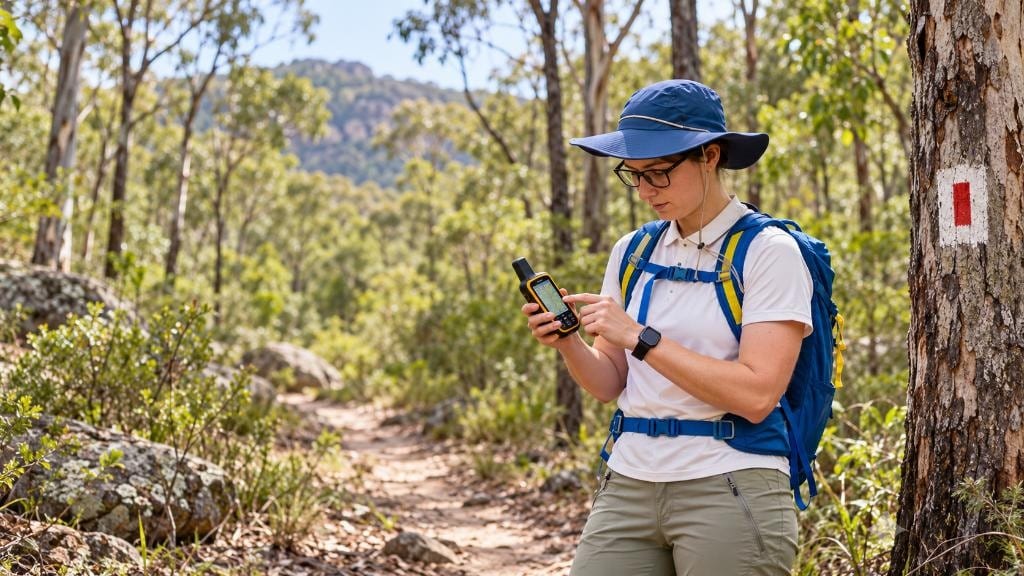
Dedicated handheld GPS units from Garmin and Magellan offer something your phone can't reliably deliver: accurate navigation that works without mobile coverage, with battery life measured in days rather than hours. They're built to survive drops, dust, rain and extreme temperatures.
Modern handheld GPS units come preloaded with topographic maps of Australia and support downloadable map packs for specific regions. Features like waypoint marking, track recording, route planning and electronic compass make them invaluable for bushwalking, 4WD touring, boating and remote property work.
Many higher-end models now combine GPS navigation with satellite messaging (like the Garmin GPSMAP 66i), giving you the best of both worlds in a single device. Battery life on AA batteries typically runs 16–35 hours depending on usage, and most units accept rechargeable lithium AAs for extended trips.
Coverage — Which Networks Work in Australia?
Australia's vast remote areas make satellite network coverage a critical consideration. Iridium's 66-satellite constellation provides true global coverage including the most remote outback locations, offshore waters and even Antarctica. Garmin inReach devices use the Iridium network, making them a reliable choice for Australian conditions.
Inmarsat and Thuraya use geostationary satellites positioned over the equator, which means coverage is excellent across mainland Australia but can degrade at very high latitudes. For most Australian travellers — including those heading to Tasmania, the Southern Ocean or the sub-Antarctic islands — Iridium-based devices offer the most reliable coverage.
SPOT devices use the Globalstar network, which has good coverage across most of Australia but some gaps in remote areas. Always check the specific coverage map for your intended travel area before relying on any satellite device.
Battery Life & Power Management in the Field
Battery life varies enormously between device types and usage patterns. PLBs are designed to sit dormant for years and then transmit for 24+ hours when activated — they use primary lithium batteries that must be replaced or professionally serviced every 5–7 years.
Satellite communicators typically run 3–14 days on a charge depending on tracking interval settings. More frequent location updates drain the battery faster. Most can be recharged via USB, making them compatible with portable power stations and solar setups.
Handheld GPS units running on AA batteries offer the most flexibility in the field — you can carry spare batteries and swap them anywhere. Satellite phones generally need daily charging on extended trips, so a small solar panel or portable power bank is a worthwhile addition to your kit.
What to Look for When Buying
- SOS capability — every device should have a dedicated emergency button that connects to rescue services
- Network coverage — confirm the satellite network covers your specific travel area, especially for remote outback or offshore trips
- Subscription costs — factor in ongoing plan costs, not just the upfront device price
- Two-way vs one-way — PLBs are emergency-only; communicators and sat phones allow check-ins and messaging
- Battery type — rechargeable USB is convenient; AA batteries offer field-swappable flexibility on long trips
- Mapping features — handheld GPS units and some communicators include topographic maps for navigation
- Durability rating — look for MIL-STD-810 or IP67/IP68 ratings for genuine outback and offshore conditions
- AMSA registration — all PLBs used in Australia must be registered with AMSA's free BEACONS system
Satellite Comms for Boating, 4WD & Remote Work
For offshore boating, an EPIRB (Emergency Position Indicating Radio Beacon) is the maritime equivalent of a PLB and is legally required on many vessels in Australian waters. Many boaters also carry a handheld satellite communicator for day-to-day check-ins and weather updates.
4WD tourers and overlanders typically pair a satellite communicator with a dedicated handheld GPS unit — the communicator handles safety and check-ins while the GPS handles navigation and track logging. Some travellers opt for a combined device like the Garmin inReach Explorer+ to reduce the number of gadgets they carry.
Remote workers — including station hands, field researchers, mining contractors and emergency services personnel — often rely on satellite phones for reliable voice communication. The ability to make actual phone calls, rather than just send messages, is critical in professional remote work contexts.
Shop Satellite Communications & GPS
Browse PLBs, satellite communicators, sat phones and handheld GPS units from leading brands.
Affiliate disclosure: We may earn a commission if you purchase through our links, at no extra cost to you.